Showing posts with label Tanzania. Show all posts

Saturday, 15 September 2012

Team UNICEF Climb Mount Kilimanjaro

Team UNICEF ready to go...
I’ve just climbed Mount Kilimanjaro with a fantastic group of UNICEF Fundraisers! We are all exhausted but incredibly proud of challenging ourselves for children. 

And what a challenge it was; from the heat of the African sunshine to sub-zero temperatures the team conquered the mountain and have raised over £100,000 to support children throughout the world.
We made it to the Roof of Africa!
The past eight days have been some of the most challenging of my life, but definitely some of the most rewarding. Climbing 5,895 meters is an extreme challenge but the wonderful Team UNICEF took each day their stride in preparation for the summit. United by raising money for children we worked together to fulfil lifelong dreams of standing on the Roof of Africa. 
There were times when we didn’t think it would be possible as we meandered around the mountain, each day climbing higher to acclimatise ourselves to the altitude. Using every ounce of physical and mental strength the majority of the group made it to the top. For some the effects of the altitude were too severe to summit but everyone who attempted is a hero for the children we're supporting.

Summit of Kilimanjaro

We were lucky enough to meet some of the children UNICEF supports in Tanzania and see examples of how the funds raised can support children throughout the world.
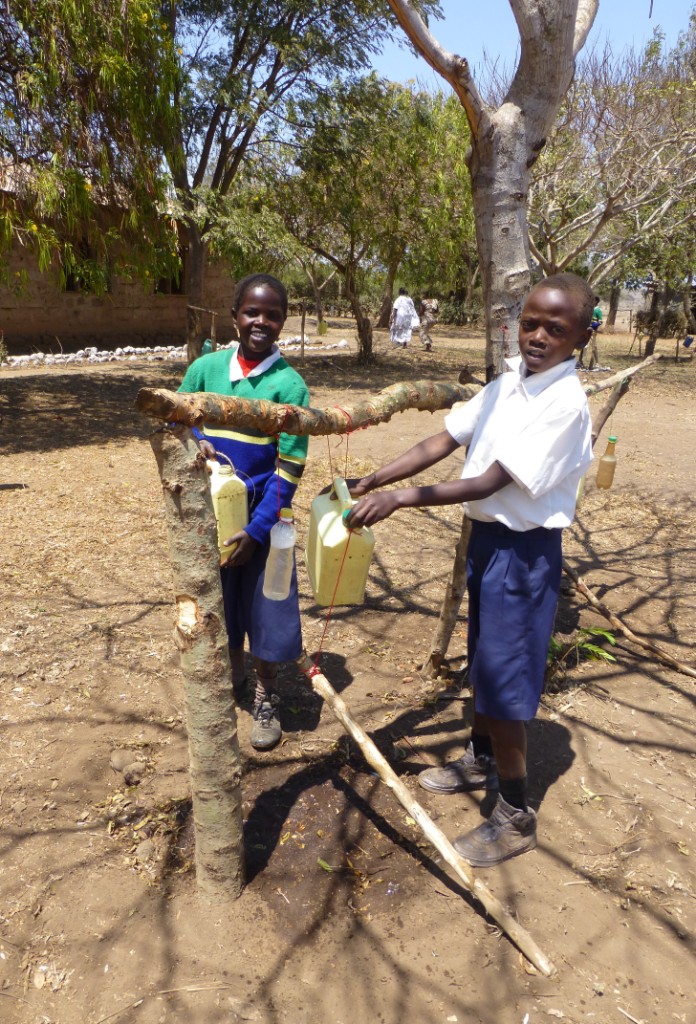
Tippy taps at Olmorog Vety Primary School
At Olmorog Vety Primary School we saw how, with UNICEF’s support, the children now have access to clean water, hand washing facilities and decent toilets. Such a simple everyday activity like hand washing is taken for granted in the UK but 92 per cent of schools in Tanzania lack functional hand washing facilities. Ahimidiwe, pictured right, proudly showed off their new and simple tippy taps. These, combined with hygiene education, can be directly responsible for saving the lives of children who otherwise could die from such an easily preventable disease as diarrhoea.
The trekkers also enjoyed playing games with the children such as football, the sack race and the lesser known; ‘catch the chicken’ game – which was lots of fun!
UNICEF Tanzania has recently piloted a project to give young people a voice. We visited The Young ReportersNetwork where children from the Moshi region have the opportunity to learn and practice journalist skills, giving them the confidence to discuss difficult issues such as HIV and AIDS, teen pregnancy and disabilities. We were all incredibly impressed with the children’s knowledge and confidence as they interviewed some of the team for their next radio programme.


Joining in the fun at Olmorog Vety Primary School
Visiting these projects assisted in the team’s motivation to climb the mountain and to continue fundraising for the world’s children on their return home.
Thank you to everyone involved and to everyone who has supported us to fulfil our dreams and transform children’s lives.

Friday, 14 September 2012

Top tips for climbing Mount Kilimanjaro


Team UNICEF
Having just completed Trek Kilimanjaro for the World’s Children I wanted to share my top tips to make climbing to The Roof of Africa a bit more comfortable...

  • Pack Light
Packing for the trek seemed just as challenging as all the training. Sticking to the strict 15kg weight limit was hard work but when on the mountain I still found I’d brought a bit too much. Don’t worry about extra clothes or a ‘clean’ fleece – everything you wear will stink so just pack one of everything and you’ll be fine.
Also remember that you need to re-pack every night so don’t squeeze everything into your tiny bag as this will be so much harder to do in the small tents at 6:30am every morning..!
  • Let there be light
Light is so important as it gets dark early and trying to pack up your tent with just one head torch can be challenging. I always take small disk lights camping with me and swear by them. They are light and small but those extra rays of light will make all the difference in your little tent
  • Hydrate
It is drummed into you every day of the trek but make sure you drink lots. Everyone’s different in the amount they need to drink, at my tiny 5ft 1 though I still put away at least 4 litres a day. There’s nothing worse than suffering from headaches, tiredness, etc just because you didn’t drink enough.

Drinking from the camelback
A couple of tips I’ve always used in making sure I keep hydrated is to add rehydration salts to my water carrier – it makes the water purification tablets taste a bit better and keeps you on top of hydration.
I always recommend a platypus or camelbak  Having the tube easily accessible makes it so much easier to constantly keep drinking rather than having to stop to take your water bottle out of your bag. It also helps when you’re backs aching from carrying all the water to make yourself drink in order to make your load lighter...!

I bought an insulated tube  for summit day but the tube still froze. I managed to get a litre of water down though as I carried a smaller platypus inside my jacket to prevent it from freezing.
Keeping warm in the tent
  • Keep warm
A hot water bottle was one of the best presents I received before the trek and it made the world of difference in the night.
  • Tidy up
A top tip passed on before the trek was to bring nappy sacks as mini rubbish bags in the tent. Ideal for collecting all the wet wipes, plasters & rubbish in the tents each day.

Trekking in the sunshine
  • Pack for the hot as well as cold
I brought lots of thermals, fleeces a big down jacket, gloves & scarves which were all really useful later on the trek but the first few days were beautifully warm. This was wonderful apart from only having one stay-dry T Shirt. I’d recommend a long sleeved, light weight stay-dry T Shirt for the first few days, this will keep you cool and also protect you from the strong African sunshine. (don’t forget your sun cream!)
  • Enjoy it.
Apart from a few hours trudging up the mountain in the dark on summit day I enjoyed every second of the trek. Go at your own pace; slowly, slowly. Take in the beauty of the country and enjoy the once in a life time experience.


Tuesday, 11 September 2012

How many people does it take to climb Kilimanjaro?


Welcoming the trekkers back to camp each day with song and dance
One of the roles as charity rep on the UNICEF UK treks is to collect the tips for the porters. When the details of the trek were being finalised last year I questioned Across the Divide (the agency who organise our treks) when they stated that there was a $240 compulsory tip in addition to the general ground costs. I thought a tip was optional and I guessed some of the participants would argue the same. I was assured that while the Tanzanian team were paid a fair wage they also rely on their tip money as a source of income and that they would earn every penny of it.


Tents were put up in all weather for our return to camp
As I collected the tips no one gave them begrudgingly and some kindly donated extra. The team looking after us have been unbelievable. From waking us up with a cup of tea in our tents every morning, setting up camp, preparing hot water, carting tables & chairs up the mountain for us to enjoy a civilised breakfast lunch and dinner every day, the list goes on and on...

So how many people does it take to get a group of 26 trekkers and 5 team up the mountain...? 107! We had 86 porters and 2 chief porters who carry all of our kit as well as the ‘essentials’ for the camp. It makes me feel guiltily to think of the heavy jars of jam, tomato sauce, hot chocolate, peanut butter, etc we were tucking into on the mountain.

Lunch time!
The 5 man tent crew not only carried the tents but also ensured they are all put up ready and waiting for us as we staggered into camp each day.
As well as our fantastic cooks, there were also the cooks who cooked for the porters, the med-bag carrier, guides, assistant guides and the list goes on...


Splitting the tips was a challenge as we had to ensure that everyone received a fair amount and that we didn't insult anyone by getting the hierarchy confused.

After much too-ing and fro-ing we got the tip just right, or so we had thought; unfortunately there had been a little confusion with the amount of porters when it came to handing out the tips, but the wonderful participants quickly put their hands in their pockets to make up the deficit and continue to show their gratitude to this awesome team.


Handing out the tips
Everyone is so grateful for the powerful team who were all responsible for making our dreams of standing on The Rood of Africa a reality. We really couldn't have done it without them!

Friday, 7 September 2012

A day on Mount Kilimanjaro


Mount Kilimanjaro!
Climbing Mount Kilimanjaro is one of the hardest things I’ve done in my life – but apart from a few dark hours on summit day it is one of the very best experiences I’ve had. Taking the Rongai Route Team UNICEF took eight days to complete our adventure. My favourite day of the trip was as we headed to Mawenzi Tarn on day four.

Clear view of the mountain
We awoke to a clear view of ‘the hill’ as our Expedition Leader lovingly refers to the highest freestanding mountain in the world.

 A few of the group begin to feel the effects of the altitude at 3,600 meters with headaches and nose-bleeds. Luckily nothing serious though as we set out with the African sun beating down on us as we begin our steady assent. ‘Pole Pole’ means ‘slowly slowly’ in Swahili and is repeated many times today as the air thins we have to pace ourselves carefully.

Trekking to Mount Kilimanjaro
It’s such a beautiful walk today and a reasonable challenge similar perhaps to climbing Snowdon but with the altitude effecting our energy levels. The views are breathtaking as we walk above the clouds they look like cotton wool cushioned beneath us.

A slightly steeper assent and the air becomes cooler, adding a few extra layers of clothing for warmth we begin to descend to our campsite. The bright yellow tents are a welcome site, as is the knowledge that we’ll be staying two whole nights so there’s no need to pack/re-pack our kit bags.

Trekking above the clouds


We have a free afternoon, some of the team take a nap, read, or write their journals. I tool a gentle stroll to admire the views in the clouds. I couldn’t resist leaving a memory of UNICEF on the mountain so created a UNICEF sign out of rocks.


Leaving a UNICEF memory 

Some of the more energetic in the group set up a game of cricket, with strictly no running to preserve their energy for the rest of the climb! This quickly gathered spectators as people emerged from their tents looking rested.

High altitude game of cricket

Before we knew, it was time for dinner and another delicious concoction was created. It’s amazing the food that can be produced from ingredients the porters have carried on their backs and cooked with limited facilities.

The team have gelled so well and every meal time we share stories, dreams and ambitions. It’s such a wonderfully diverse and interesting group and I feel very proud to be part of it. Each of us doing our small bit to support UNICEF and the children like those we were lucky enough to meet at the beginning of our adventure. Thank you to everyone who has supported us.

Thursday, 4 August 2011

Trek for the children of Namibia: one month to go


This time next month I'll be in the Namib desert with 16 UNICEF fundraisers. We're trekking 115 kilometres through the oldest desert in the world to the Skeleton Coast, hiking over sand dunes and dodging hyenas and other wildlife. All in 35-40 degrees heat.
The challenge began months ago for the trekkers who've been training and fundraising to support the rights of children in Namibia.
One of our trekkers, Amy, has been fundraising in everyway she can think of. She's organised a regular vintage cake stall in her office,  put up a display at her gym with sponsor forms and a collection tin, given swimming lessons for 40 children at her local pool, and she's also busy with car boot sales and gigs. Phew!
Amy's not the only one to have organised gigs: another trekker, Phil, was sponsored to stay on stage for 24 hours solid and raised £2,600!
Other trekkers have been out with collecting buckets: Adrian raised £177 in just one day like this at Oxford train station.
There are BBQs, garden parties, quiz nights and many raffles going on to help the trekkers reach their target of £3,250 to take part in the trek.


As I write this I'm surrounded by cakes for a cake bake I’m holding in the UNICEF UK office to raise some extra funds.
Our trekkers are also raising money via our very own online fundraising site, My Fundraising.
These donations will be used to realise children’s rights in Namibia and the trekkers will have the opportunity to visit UNICEF projects.
Forty per cent of children in Namibia are not registered at birth. This means that schools, health clinics and other children's services are not provided. Not having a birth certificate makes children more vulnerable to trafficking or exploitation. We'll be visiting one of the 22 birth registration facilities that UNICEF has set up in partnership with the government. 
UNICEF uses sport as a way to educate children, promote a healthy life style and develop children’s skills. In Namibia we'll be visiting the Kwata Cricket Initiative at a local school and might even get to play in a mini cricket match with the girls taking part in the programme.
On our last day we'll visit an HIV prevention programme for high school children. UNICEF runs this with the Ministry of Education in 72 per cent of secondary schools in Namibia. It's a way to educate young people about HIV prevention and life skills, and with around 16 new infections a day in Namibia, it's a vital part of helping prevent the spread of HIV and AIDS. 
  
I’m really looking forward to showing the trekkers what UNICEF is doing, and letting them see first hand just how vital their support is. I must say I'm not looking forward quite so much to the prospect of not showering for eight days!
If you're feeling inspired, you can read about our next trek, which will take us up the highest free-standing mountain in the world, Mount Kilimanjaro.